
PROTECTING HISTORY
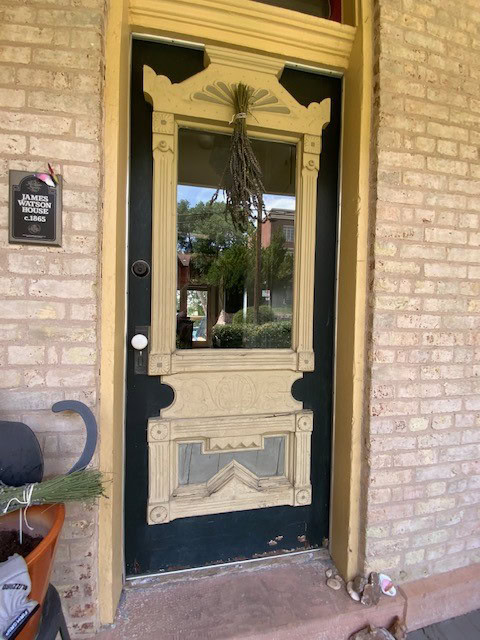
Last summer the Salt Lake City Counsel enacted a legislative intent to explore available options for a street sign program that designates a recognized historic district in the city. For example, if you live east on Laird Avenue, the street sign would said LAIRD AVE and either ‘local historic district’ or ‘local historic district/Yalecrest Neighborhood’. Salt Lake City has 14 historic districts, including The Avenues, Capitol Hill, Central City, South Temple, Yalecrest, and University, plus smaller local ones within Yalecrest (like Normandie Circle, Harvard Heights) and others like City Creek/Memory Grove, Exchange Place, Liberty Wells, and Fort Douglas. We created this to preserve distinct architectural styles and historical development from the late 19th and early 20th centuries. These districts are designated by the City Council and/or are listed on the National Register of Historic Places.
As a volunteer Planning and Zoning Commissioner for eight years, I found that many home buyers had no clue that their home was in one of the 14 local historic districts. They would do things to their property that weren’t allowed under the protection rules for the districts, like putting up vinyl fencing, installing vinyl windows vs wood frame windows, painting exterior brick or masonry, etc. The point is to ensure compatibility with the homes’ historic character and the surrounding properties. After much discussion and meetings, we were able to require title companies to state on title reports that the property is in a historic district. Thus, no excuse for changing the exterior of the property and saying to enforcement officials “Oh, I didn’t know it was in a Historic District!”
Back in the 1960’s and ‘70s, homes in areas like The Avenues that were many decades old were being torn down like crazy. Locals stepped up and worked with City officials to create rules and regulations to protect these precious properties, much to the distaste of flippers who often wanted to opt for cheaper upgrades to a property rather than protect the exteriors. FYI-you can basically do whatever you’d like inside your home if you live in a historic neighborhood, as it’s the exteriors we’re attempting to protect. I recall one public hearing for Historic Landmarks Commission (I’m now on my second term serving the City in Landmarks) where a property was flagged in Capitol Hill for having painted the brushed brick exterior. The owners has recently purchased the home and thought it was lovely, but had no idea it was not in compliance with local ordinances. It was going to cost a fortune to remove the paint.
City Council has been asking for feedback, and eventually street signs in historic neighborhoods will soon advertise you’re in a precious area of our town. For a lookup map go to www.slc.gov/historic-preservation/historic-districts-and-buildings/local-historic-districts/